

How to Know If You Need a Dental Bridge or an Implant
A missing tooth rarely stays a simple problem. Neighboring teeth can start to shift, chewing gets harder on one side of the mouth, and the jawbone beneath the gap begins to change shape over time. Patients weighing a dental bridge against a dental implant tend to ask the same question: which one is actually right for me?
Our Grandville and Cascade, MI, dentists walk every patient through both restorations before recommending one, so you understand exactly why a bridge or an implant fits your situation.
Here’s how to know which option makes more sense for you.
What Is a Dental Bridge & Who’s Eligible?
Dental bridges replace one or more missing teeth by anchoring a false tooth to the natural teeth on either side of the gap. Those neighboring teeth are typically capped with crowns, which hold the bridge firmly in place and let it function like the rest of your bite.
A custom dental bridge tends to be the better fit when the supporting teeth already have fillings, old crowns, or enough wear that they’d benefit from a crown anyway. Treatment also moves faster, since there’s no bone-healing period before the finished restoration is in place. The tradeoff is that those supporting teeth need to be reshaped, and most bridges last five to fifteen years with good care.
What Is a Dental Implant & When Does It Make Sense?
Dental implants work differently. A titanium post is placed directly into the jawbone, where it fuses with the bone over several months, then supports a crown, an implant-supported bridge, or an implant-supported denture.
Because the post stands on its own, single-tooth implants don’t require any work on the teeth next to the gap, which matters when those teeth are otherwise healthy. The reported success rates of implants are 97 to 98%, and implants help preserve the jawbone in a way a bridge cannot, since a titanium post fused to the jawbone keeps stimulating the bone like a natural tooth root.
The tradeoff is timing: requires enough bone density, and healing before the final crown can take a few months. A dental implant consultation with our dentists starts with a full evaluation of your candidacy.
How Our Dentists Can Help You Decide
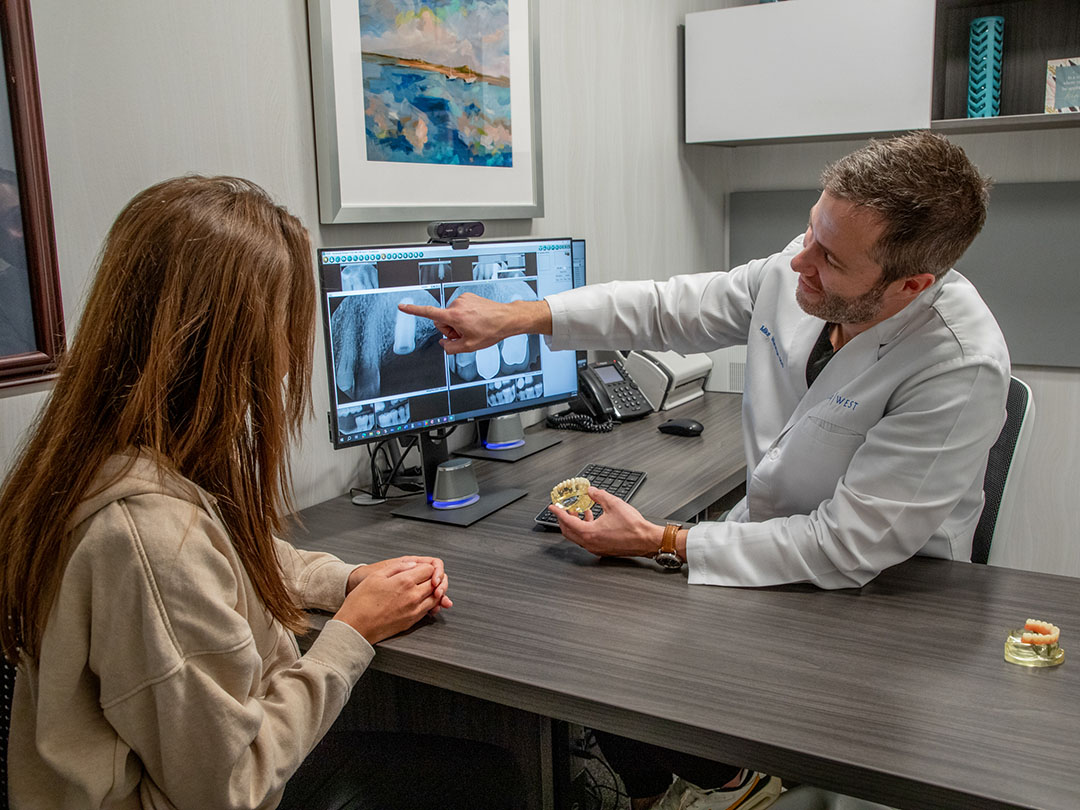
At your visit, our local tooth replacement dentists review the health of the surrounding teeth, the bone at the site of the missing tooth, and your overall health history. From there, they’ll walk you through compared to an implant, including cost, timeline, and long-term maintenance for each.
There’s rarely a single right answer that applies to everyone. What matters is getting an exam before deciding, rather than guessing based on what worked for a friend or family member.
Don’t Wait Too Long to Decide
A gap left untreated doesn’t stay the same size. Neighboring teeth can tilt into the space, opposing teeth can over-erupt, and the bone underneath keeps changing shape the longer a tooth stays missing, which can make either restoration more complicated and more expensive down the road.
Whether you’re leaning toward a fixed dental bridge or an implant already, the best next step is the same: get in for an evaluation while your tooth replacement options are still open. We’ll walk you through everything so you have all the answers you need.
Schedule a Consultation
Ready to find out whether a dental bridge or a dental implant is the better fit for your smile? Call 44 West Dental Professionals today at one of our convenient locations or contact us online to request an appointment. Our dentists in Grandville and Cascade, MI, have served families throughout the Greater Grand Rapids area for many years and are ready to help you replace your missing tooth with confidence.